
Choosing the best time to visit Heart Reef
The best time to visit Heart Reef depends on whether the priority is an aerial view, a boat journey or a combined day. June to September has lower average rainfall than January to March in the Proserpine Airport climate record. That makes these months a useful starting point for planning, rather than a promise of clear skies or calm water at the reef. Heart Reef is an overflight destination; swimming on a tour takes place at the location specified for that product.
Start with the scenic flight comparison if seeing the coral heart is the main aim. For time in the water at the outer reef, read the Hardy Reef pontoon guide. These choices respond differently to wind, sea conditions and changes to the day’s programme. A dry mainland forecast alone does not settle either decision.

Read the monthly climate record in context
The Bureau of Meteorology’s Proserpine Airport series uses all years of record, with data available to 31 October 2026. Temperature means cover 1988 to 2026 and rainfall means 1978 to 2026, each with 37 available years. These are mainland airport observations. Use them for a seasonal comparison, while keeping the day’s marine and aviation conditions separate.
February has mean monthly rainfall of 351.7 mm, compared with 17.8 mm in September. July’s mean daily maximum is 24.5°C and its mean daily minimum is 11.3°C; December’s equivalents are 32.2°C and 21.8°C. These averages help explain the difference between a cooler mainland morning and the warmer months. They do not describe the temperature, cloud cover or underwater visibility during an individual excursion.
Flight and reef-day option
This combination pairs an aerial view with a Whitehaven day and snorkeling at an inner fringing reef.
Hand-picked tours, booked through GetYourGuide. Prices are indicative starting prices in Australian dollars (as of October 2026). Tap a tour for live availability and the current price in your currency.
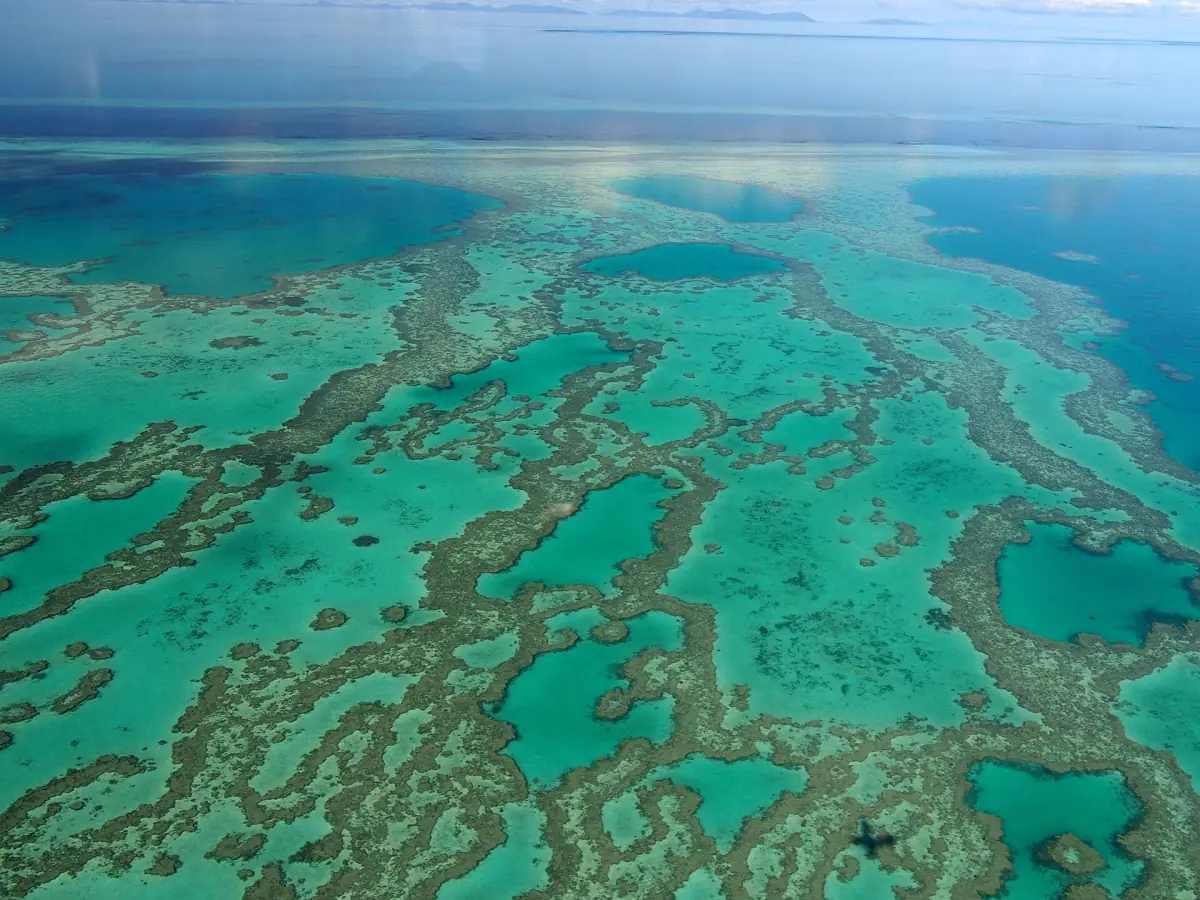
A flight and boat day with different weather needs
Combine the Heart Reef overflight with Whitehaven Beach and inner fringing reef snorkelling, allowing for conditions on both the aviation and water stages.
Flight weather and changing your booking
Keep the reef outing away from an immovable onward connection where the itinerary allows. Wind, tide and sea conditions can change the programme, and rain alone does not necessarily mean a boat trip is cancelled. For a flight, the operating decision belongs to the crew. Read the specific cancellation and rescheduling conditions attached to the chosen departure rather than treating all aircraft and tours as interchangeable.
The flight and boat combination brings separate weather-sensitive stages into the same plan. It includes a fixed-wing flight with a window seat, a guided national park walk, snorkelling at an inner fringing reef, lunch on Whitehaven Beach, hotel pickup and drop-off, and a sun suit or wetsuit with snorkelling equipment. The water activity is distinct from Heart Reef and Hardy Reef. Drinks and snacks cost extra, and an additional surcharge applies on designated Queensland dates.
Marine stingers and protective clothing
Queensland safety guidance describes a seasonal increase in marine-stinger risk, with possible occurrence throughout the year. Choose protective clothing for water activities and follow the crew’s instructions about wearing it. A suit reduces exposure but does not make swimming risk-free. Avoid choosing a month on the assumption that the sea will be free of stingers.
For the combination described here, the included sun suit or wetsuit belongs to that product’s water programme. It is not a general promise that every excursion supplies the same equipment. Match the actual activity to personal swimming ability and discuss concerns with the crew before entering the water.
Cyclone season and the seaplane seasonal pause
The Bureau of Meteorology defines the Australian tropical cyclone season as 1 November to 30 April, with events possible outside that period. This is a risk period, not an automatic closure of every reef tour. Keep transport arrangements and the excursion’s weather conditions together when choosing dates; a confirmed accommodation booking does not decide whether a flight can operate.
A particular seaplane lagoon excursion has a recurring seasonal pause from February through April inclusive. That rule applies to that seaplane product, rather than to the fixed-wing and boat combination or the reef as a whole. Distinguish a product calendar from a general seasonal weather pattern.
Dated changes on a Whitehaven combination
A park notice published on 20 October 2026 schedules work at Tongue Point from 30 November to 4 December 2026. Sections of platforms, boardwalks and day-use areas may close temporarily, while at least one lookout remains open. This matters when an itinerary uses the affected Whitehaven-area facilities; it is not a closure of Heart Reef or the whole beach.
Finish the plan by matching your overnight base to the departure and reading the airport and marina connections. Keeping those practical details aligned leaves more room to handle a revised excursion without confusing a mainland transfer with the flight or reef passage itself.
Questions about your visit
Does September guarantee a clear view of Heart Reef?
September has the lowest average monthly rainfall in the specified Proserpine Airport record. Local cloud, visibility and flight conditions still determine the view on the day.
Is the reef closed during cyclone season?
The season describes a period of increased cyclone risk. Individual departures depend on operating conditions and crew decisions; it is not a scheduled closure of every reef activity.
Where does the combined tour go snorkelling?
Its included snorkelling is at an inner fringing coral reef. The Heart Reef part is an overflight, and the combination should not be booked as a Hardy Reef snorkelling day.